
Strategic Siemens Teamcenter Consulting: Navigating Industrial Digitalization in 2026
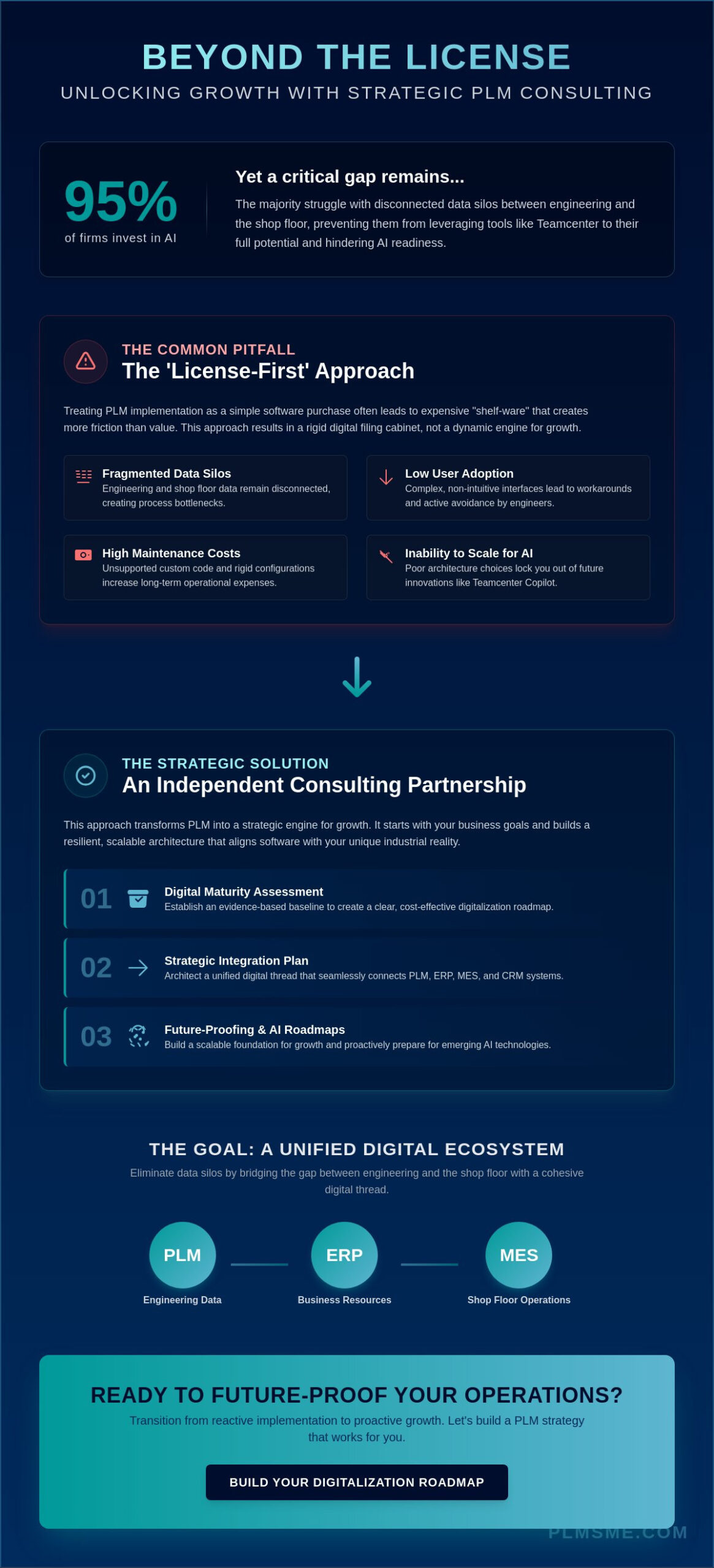
With 95% of manufacturing firms now investing in AI and machine learning, the race for industrial intelligence is officially on, yet the majority of these organizations still struggle with disconnected data silos between engineering and the shop floor. You’ve likely realized that a powerful tool like Teamcenter 2606 can’t solve systemic inefficiencies if it’s treated as a standalone application rather than a core business driver. It’s a common frustration; high implementation costs often yield little ROI when there’s no clear strategic roadmap or internal expertise to manage the complex architecture. Specialized Siemens Teamcenter consulting bridges this gap by transforming complex PLM software into a strategic engine for growth and AI readiness.
In this article, you’ll discover how to navigate the shift toward a unified digital thread that connects your PLM, ERP, and MES systems into one cohesive ecosystem. We’ll outline a clear digitalization roadmap that prioritizes your company’s digital maturity over simple software deployment. You’ll also learn how to build a scalable architecture that supports tools like Teamcenter Copilot, ensuring your organization is prepared for the rapid technological shifts expected throughout 2026 and beyond.
Key Takeaways
- Move beyond simple technical installation by viewing PLM as a strategic partnership that aligns software capabilities with your specific industrial reality.
- Learn why a comprehensive digital maturity assessment is the essential first step to establishing a clear, cost-effective digitalization roadmap.
- Discover how to bridge the gap between engineering and the shop floor through seamless integration of Teamcenter with ERP, CRM, and MES ecosystems.
- Understand the critical differences between vendor-driven deployments and independent Siemens Teamcenter consulting to ensure your implementation remains objective and results-focused.
- Transition from reactive implementation to proactive growth using managed system administration and strategic AI roadmaps for long-term scalability.
The Strategic Imperative: Why Siemens Teamcenter Consulting Transcends Software Installation
Many organizations treat PLM adoption as a procurement task rather than a fundamental shift in business logic. In 2026, simply acquiring a license for Siemens Digital Industries Software doesn’t guarantee a competitive edge. True Siemens Teamcenter consulting operates as a strategic partnership, focusing on how data flows through your unique industrial environment. It’s about ensuring that the digital thread actually supports your specific manufacturing goals rather than just creating a digital filing cabinet for CAD files.
A “license-first” approach often leads to expensive shelf-ware or systems that engineers actively avoid because they add friction to their daily tasks. Without a clear roadmap, the gap between software capability and industrial reality becomes a chasm. Strategic consulting bridges this by translating high-level business objectives into technical requirements. Independent advice is crucial here; a neutral advisor helps you avoid the bias of vendors who might prioritize license sales over your operational efficiency. In 2026, the complexity of AI-driven manufacturing means that a single wrong architectural choice can lock you out of future innovations.
Common pitfalls of software-only deployments include:
- Fragmented data across different engineering and shop floor departments
- Low user adoption due to overly complex, non-intuitive interfaces
- High maintenance costs for unsupported or poorly documented custom code
- Inability to scale the system for upcoming AI or machine learning integration
Moving Beyond Out-of-the-Box Functionality
Standard configurations rarely account for the nuances of discrete manufacturing. While “out-of-the-box” sounds cost-effective, it often results in rigid processes that stifle innovation and force teams into workarounds. Custom workflow development is necessary to reduce engineering friction and ensure that the software adapts to the user, not the other way around. Strategic PLM Consulting is the alignment of software architecture with long-term business KPIs.
The Consultant as a Thinking Partner
High-level industrial digitalization requires more than just someone to click buttons in a database. You need a thinking partner who provides strategic oversight throughout the entire project lifecycle. This involves navigating PLM implementation challenges manufacturing by identifying potential bottlenecks before they disrupt production. Instead of just executing tasks, an expert consultant engages with your vision to build a resilient system architecture that evolves alongside your business.
Architecting Success: The Role of Digital Maturity Assessments in PLM Strategy
A successful PLM deployment doesn’t happen by accident; it’s engineered through a rigorous analysis of a company’s current operational state. While many organizations rush into technical configuration, expert Siemens Teamcenter consulting begins with a comprehensive digital maturity report. This baseline assessment acts as a diagnostic tool, identifying where data silos exist and where legacy processes are too brittle to support modern workflows. By understanding your specific starting point, you avoid the common trap of over-engineering solutions that your current infrastructure can’t yet support. It’s about moving from reactive troubleshooting to proactive architecture.
Evidence-based planning is the only reliable way to reduce the technical debt often associated with large-scale industrial software projects. A maturity assessment evaluates data governance, existing IT infrastructure, and the readiness of your workforce to adopt new digital tools. This process is essential for building a robust Digital Thread for Smart Manufacturing, which ensures that information flows seamlessly from the initial design phase through to production and service. Without this foundational data, any attempt at system integration remains a series of disconnected, expensive patches. If you’re looking for clarity on your next steps, a professional digital maturity assessment provides the objective data needed to move forward confidently.
Developing a Digitalisation Vision and Roadmap
Creating a multi-year roadmap involves more than just scheduling software updates; it requires a clear understanding of the strategic value of a digital maturity report in manufacturing to prioritize investments. This roadmap sets realistic milestones for CAD/CAM/CAE integration, ensuring that each phase builds upon the last. It’s a methodical progression that transforms a fragmented toolset into a unified platform. By defining these stages early, you can manage stakeholder expectations and secure the necessary budget for long-term growth. For manufacturers operating in the region, following a structured industrial digitalization roadmap UAE facilities can implement ensures that every investment aligns with national benchmarks like the Industrial Technology Transformation Index.
Identifying AI Readiness and Automation Potential
Industrial AI relies on high-quality, structured data to deliver actionable insights, yet many firms lack the data hygiene required for success. During the maturity assessment, we evaluate whether your current data structures support or hinder future AI applications. Criteria for “AI-ready” data include standardized naming conventions, complete metadata, and clear version control. Data hygiene in Teamcenter is the foundation of industrial AI success. Without it, automation efforts will likely fail due to inconsistent or poorly classified information.
Eliminating Data Silos: Integrating Teamcenter with ERP, CRM, and MES Ecosystems
Industrial digitalization fails when data remains trapped in functional silos. Expert Siemens Teamcenter consulting ensures that the PLM system acts as the technical heartbeat of the enterprise, extending its reach far beyond the engineering department. A true end to end PLM implementation connects the initial product concept to final delivery, creating a seamless flow across the entire value chain. Without this connectivity, companies often face the “islands of automation” problem, where individual departments operate efficiently but the organization as a whole remains sluggish. Technical challenges often arise when mapping complex PLM data models to the transactional nature of ERP or the customer-centric focus of CRM, yet overcoming these hurdles is essential for eliminating manual data entry and the costly engineering errors that stem from outdated information. Understanding the common PLM implementation challenges manufacturing organizations face during these integrations is a critical step toward building a resilient and connected enterprise architecture.
Manufacturing Operations Management (MOM) plays a critical role in this ecosystem by providing the visibility needed to optimize production schedules based on real-time PLM data. It acts as the orchestrator between the virtual design and the physical reality of the factory floor. When integrated correctly, the system automatically pushes engineering changes to the production line, ensuring that the shop floor always works from the latest revisions. This synchronization reduces scrap and rework, as it removes the reliance on paper-based instructions or disconnected spreadsheets that quickly become obsolete in a fast-paced manufacturing environment.
Bridging the Engineering-to-Production Gap
Integrating Teamcenter with Manufacturing Execution Systems (MES) provides real-time shop floor feedback that’s vital for continuous improvement. This connection allows for a robust digital thread for information, ensuring that as-built data mirrors the as-designed intent. Maintaining a single source of truth across disparate platforms prevents production delays and material waste. Beyond the factory walls, unlocking Teamcenter CRM integration benefits ensures that customer requirements directly influence product development, closing the feedback loop between the market and the design team.
Managing Complex System Architecture
Scalable integration requires more than just simple connectors; it demands sophisticated PLM system architecture consulting to handle multi-site data management and high-volume transactions. Utilizing “Dispatcher” solutions allows for asynchronous data processing, which prevents system bottlenecks during heavy synchronization tasks between Teamcenter and external ERP systems. For national-scale industrial operations, the architecture must be designed to accommodate future growth without sacrificing performance. This methodical approach to system design ensures that your digital ecosystem remains stable and responsive as your production volume increases.
Evaluating PLM Partners: Independent Consultancy vs. Vendor-Driven Implementation
Working with a Siemens Digital Industries Alliance Partner provides a unique advantage. You get the depth of technical expertise associated with the platform’s inner workings, but with the objective distance of a consultant who isn’t trying to upsell you on seats. This partnership model ensures the consultant remains at the cutting edge of version updates, like the 2606 release, while maintaining the freedom to recommend lean, cost-effective strategies. With the industrial sector projected to spend $224.7 billion on digital transformation in 2026, according to recent market forecasts, the cost of a failed or over-scoped implementation is higher than ever. Independent experts focus on building a sustainable system that grows with you, rather than one that requires constant, expensive license expansions.
Transparency in Implementation Costs
One of the biggest hurdles in any PLM project is the lack of financial clarity. By analyzing PLM implementation cost for manufacturing through a strategic lens, you can identify where hidden technical debt might accumulate. Expert consulting prevents scope creep by utilizing a fixed-scope assessment phase. This initial deep dive defines the project’s boundaries clearly, ensuring that you pay for results rather than endless billable hours. It’s a methodical way to ensure your budget is allocated to high-value integrations rather than generic configuration tasks.
Bespoke Support vs. Generalist Services
Large-scale generalist IT firms often lack the granular industry knowledge required for discrete manufacturing. They might understand database management, but they don’t understand the nuance of a multi-level Bill of Materials (BOM) or complex engineering change orders. A boutique specialist functions as a thinking partner, engaging deeply with your long-term vision. This specialized focus means you receive tailored advice that respects the technical realities of your shop floor. If you’re looking for a partner who understands the intersection of engineering and digital architecture, our End-to-End PLM Implementation Support provides the technical precision your project demands.
Future-Proofing Operations: AI Roadmaps and Managed PLM Administration
The completion of a software rollout marks the beginning of a system’s true lifecycle, not its conclusion. Effective Siemens Teamcenter consulting transitions from the high-intensity implementation phase into a structured, long-term administration strategy. This shift is vital for maintaining the integrity of the digital thread as your organization grows. In regions like the Middle East, aligning these efforts with industrial automation solutions in the GCC is becoming a critical component of the 2026 outlook. Companies that fail to plan for ongoing management often see their data standards erode within months of deployment, leading to a fragmented system that can no longer support advanced automation or real-time analytics.
As you scale these industrial efforts, integrating smart building technologies can further streamline your operations. To discover how local experts are driving this change, you can visit Rocatech for professional automation solutions in the Emirates.
Beyond industrial facilities, the same need for structured management applies to the surrounding urban infrastructure. In Dubai, for instance, Shepherd HomeOwners’ Association specializes in the professional management of residential and commercial communities, ensuring that every aspect of the local ecosystem is maintained to international standards.
For specialized technical components in modern facilities, Fibrepros provides high-quality optical lighting solutions across the Emirates, supporting the region’s push for advanced infrastructure.
To further enhance the physical infrastructure of industrial sites, you can check out Sahara Doors & Metals LLC for high-performance shutter systems and architectural metal solutions designed for the region’s demanding environments.
When developing high-end commercial spaces or specialized maritime facilities, the integration of premium interior architecture is a key consideration. Pianta Design offers expert interior design for luxury residential, commercial, and yacht projects, ensuring that the physical environment matches the sophistication of the underlying technology.
To ensure the physical infrastructure matches the digital sophistication, Projeco Contracting LLC | Villa Construction | Apartment Interiors Fit Out provides expert design and build services for luxury villas and high-end commercial renovations in Dubai.
Beyond the visual design, the sensory atmosphere of a workplace or showroom plays a vital role in brand identity; ISCENT offers premium scenting technologies that complement sophisticated interior architecture.
Given that protecting intellectual property is vital during digital transformation, you can find out more about how OAD Technologies provides specialized cybersecurity and data loss prevention for enterprises in the region.
To support the logistics of industrial networking and corporate events in the region, SCN Travel specializes in designing bespoke journeys and professional MICE experiences for businesses expanding their presence in Dubai.
To effectively communicate your digital transformation and reach audiences in German-speaking markets, you can explore Content-Erstellung with Digital-PR’s specialized blog marketing and SEO services.
Managed services provide the stability needed to evolve from basic data management to advanced industrial intelligence. By treating PLM as a living infrastructure rather than a static tool, you ensure that your technical architecture remains agile enough to adopt new features without disrupting existing production. This methodical approach to system health prevents the accumulation of technical debt and ensures that your digital investment continues to deliver measurable ROI as market demands shift.
The Value of a PLM Administration Retainer
Ongoing support is essential for preventing the erosion of data standards that often occurs when internal teams are stretched too thin. A PLM system administration retainer ensures that your environment remains optimized for performance while managing the complexities of software updates and CAD version compatibility. Without dedicated oversight, small inconsistencies in metadata or workflow execution can snowball into major system failures. A structured retainer acts as an insurance policy for digital continuity. It provides the steady, expert guidance needed to navigate technical shifts long after the initial implementation team has moved on.
Executing the AI Transformation Strategy
The next frontier for PLM lies in its ability to act as a high-quality data feeder for artificial intelligence. By 2026, the focus will shift heavily toward how Teamcenter data feeds predictive maintenance and generative design. This requires a clear AI roadmap that outlines how existing PLM workflows will integrate with machine learning models. When your data is properly structured, AI can analyze historical performance to suggest design optimizations or predict when a machine on the shop floor is likely to fail. Starting your digital maturity journey today ensures that your organization is prepared for the rapid industrial shifts of the coming years.
Driving Sustainable Industrial Growth through Strategic PLM
Industrial digitalization in 2026 demands a shift from simple software deployment to a comprehensive, architectural vision. Successful organizations realize that the value of their PLM system isn’t found in the license itself, but in the seamless flow of data across the entire value chain. By prioritizing digital maturity and eliminating silos between engineering and production, you create a resilient foundation for future AI adoption. Specialized Siemens Teamcenter consulting ensures this transition remains objective and focused on your specific business KPIs rather than vendor-driven quotas.
As an independent Siemens Digital Industries Alliance Partner, we specialize in discrete industry digitalization through a vendor-neutral advisory model. We act as your thinking partner, providing the technical precision and strategic oversight needed to transform your operations. If you’re ready to move beyond technical configurations and start building a scalable digital thread, Request a Strategic Digital Maturity Assessment today. Let’s work together to ensure your industrial ecosystem is prepared for the challenges and opportunities of the coming years.
Frequently Asked Questions
What is the primary difference between a Teamcenter reseller and a Teamcenter consultant?
A Teamcenter reseller primarily focuses on software license distribution and meeting sales quotas, while Siemens Teamcenter consulting focuses on the strategic alignment of the software with your business processes. Consultants act as independent advisors who prioritize system architecture and operational efficiency over software volume. This ensures your implementation is sized correctly for your actual needs rather than bloated with unnecessary features.
How long does a typical Siemens Teamcenter implementation take for a national manufacturer?
A typical implementation for a national manufacturer generally spans six to twelve months for the initial production phase. This timeline depends on the complexity of your data, the number of sites involved, and the depth of integration required with existing systems. A phased approach often helps in delivering early value while managing the organizational change required for a full-scale digital transformation.
Can Siemens Teamcenter be integrated with non-Siemens ERP systems?
Yes, Teamcenter is designed to integrate seamlessly with a wide variety of non-Siemens ERP systems, including SAP, Oracle, and Microsoft Dynamics. Utilizing standard integration gateways allows for the bidirectional flow of bill-of-materials (BOM) and change order data. This connectivity is essential for maintaining a single source of truth across your engineering and financial departments, reducing the risk of manual entry errors.
What is a Digital Maturity Report, and why is it necessary before implementation?
A Digital Maturity Report is a comprehensive diagnostic that evaluates your current IT infrastructure, data governance, and workforce readiness. It’s necessary because it identifies hidden technical debt and process bottlenecks before you spend money on software configuration. Starting with this assessment ensures your PLM roadmap is based on evidence rather than assumptions, significantly reducing the risk of project failure and over-spending.
Does Siemens Teamcenter consulting include data migration from legacy systems?
Data migration is a fundamental component of professional Siemens Teamcenter consulting services. This process involves extracting data from legacy PDM or CAD systems, cleaning it to meet new standards, and mapping it to the Teamcenter data model. Expert guidance during this phase is critical to ensure that your historical intellectual property remains searchable and accurate within the new environment, preventing the “garbage in, garbage out” scenario.
What are the benefits of a PLM system administration retainer for small-to-medium enterprises?
A system administration retainer allows small-to-medium enterprises to access high-level technical expertise without the overhead of a full-time internal hire. These retainers cover routine maintenance, CAD version updates, and user support, ensuring the system remains healthy and performant. It provides a predictable cost model while protecting your digital thread from the data erosion that often occurs when systems are left unmanaged by specialized staff.
How does Siemens Teamcenter support an industrial AI roadmap?
Teamcenter supports an industrial AI roadmap by acting as the primary source of structured, high-quality product data. Features like Teamcenter Copilot and AI-powered BOM agents require clean metadata and consistent classification to function effectively. By establishing rigorous data hygiene today, you create the necessary foundation for future generative design and predictive maintenance applications that rely on historical engineering data.
Is it possible to implement Teamcenter in phases to manage costs?
Implementing Teamcenter in phases is a highly recommended strategy for managing both costs and organizational change. This “crawl-walk-run” methodology allows you to focus on high-priority modules, such as document management or BOM control, before expanding into complex areas like manufacturing process planning. Each phase provides a clear milestone for ROI, ensuring the project remains financially sustainable while the organization matures technically. To understand how regional manufacturers are structuring these investments, exploring a comprehensive industrial digitalization roadmap UAE manufacturers can follow provides valuable context for aligning your phased approach with MoIAT industrial standards.