
Presenting PLM Benefits to Stakeholders: A Strategic Framework for 2026
What if your executive team viewed PLM as a strategic engine for growth rather than a recurring line-item expense? For many engineering leaders, presenting PLM benefits to stakeholders feels like a constant uphill battle against the perception that digital transformation is just another cost center. You’ve likely felt the frustration of trying to explain the technical necessity of Siemens Teamcenter 2606 while the CFO focuses solely on the implementation price tag. In an era where the global PLM market is surging toward a $52.4 billion valuation, failing to articulate the ROI of a unified digital thread doesn’t just stall your budget. It risks leaving your organization behind as competitors leverage AI-driven workflows and embedded sustainability data.
We understand that translating complex technicalities into specific dollar amounts is the hardest part of the job. You’re likely worried about data silos or the potential for implementation failure; however, these risks are exactly why a structured communication framework is essential. This guide will show you how to move past the “efficiency” buzzwords and build a clear ROI roadmap that wins executive approval and budget. You’ll learn how to align cross-departmental teams on a shared digital vision and position PLM as the indispensable nerve center for your 2026 strategy.
Key Takeaways
- Identify the specific value drivers for Finance, Operations, and IT to move your pitch beyond engineering-centric arguments.
- Master the art of presenting PLM benefits to stakeholders by mapping Siemens Teamcenter capabilities to a unified enterprise “Digital Thread.”
- Use data-driven insights from digital maturity assessments to quantify the cost of current inefficiencies and overcome the “complexity” objection.
- Implement a 5-step presentation framework that uses emotional hooks and objective gap analysis to secure executive budget approval.
- Maintain project momentum post-approval by leveraging vendor-independent consultancy for solution architecture and end-to-end implementation support.
Identifying Key Stakeholders and Their Value Drivers
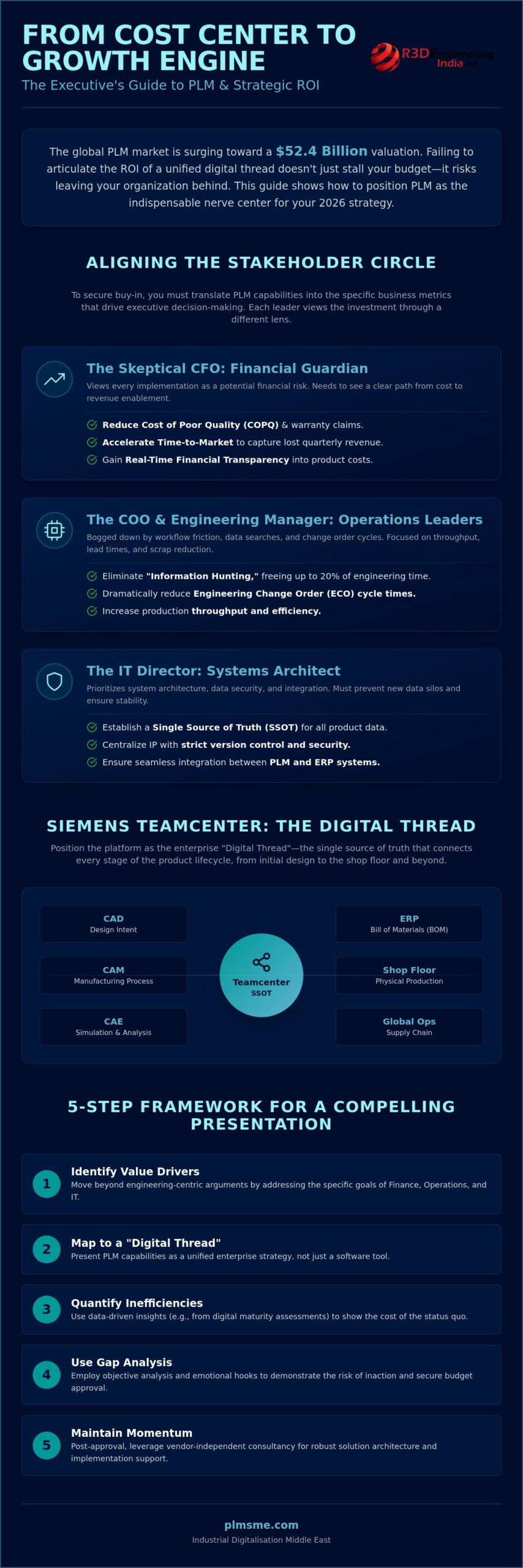
Successfully presenting PLM benefits to stakeholders requires moving beyond engineering features. You need to map the software’s capabilities to the specific business metrics that drive executive decision-making. The PLM Stakeholder Circle typically includes the CFO, COO, IT Director, and Engineering Manager. Each of these leaders views the investment through a different lens, ranging from capital expenditure (CAPEX) vs. operating expense (OPEX) models to the granular details of product lifecycle stages. Without this alignment, your proposal remains a technical request rather than a strategic business case.
The IT Director prioritizes system architecture and data security above all else. They need to know how a new solution fits into the existing stack without creating new data silos. Meanwhile, the COO focuses on tangible production metrics: throughput, lead times, and scrap reduction. When presenting PLM benefits to stakeholders in these diverse roles, you must address their specific operational anxieties. If these leaders aren’t aligned, the project stalls because the perceived risk outweighs the technical promise.
The Skeptical CFO: Translating PLM into ROI
The CFO views every large-scale software implementation as a potential financial risk. To win them over, focus on reducing the Cost of Poor Quality (COPQ) and the volume of warranty claims. These are hard numbers that directly impact the bottom line. Explain how PLM acts as a financial transparency tool for product costs by providing real-time visibility into material choices and manufacturing processes. By accelerating time-to-market, you aren’t just working faster; you’re capturing quarterly revenue that would otherwise be lost to competitors. This shift from viewing PLM as a cost to seeing it as a revenue-enabler is critical for budget approval.
The COO and Engineering Manager: Solving Workflow Friction
Operations and engineering teams are often bogged down by “Information Hunting,” where highly paid engineers spend up to 20% of their time searching for the correct data. This is a massive drain on resources. By linking PLM to the reduction of Engineering Change Order (ECO) cycle times, you demonstrate a direct path to increased throughput. A digital maturity report manufacturing helps identify these hidden bottlenecks by quantifying exactly where data friction occurs. Once these gaps are visible, the argument for a unified digital thread becomes undeniable. You’re no longer just buying software; you’re fixing a broken production engine.
Mapping Siemens Teamcenter Capabilities to Strategic Business Outcomes
Bridging the gap between engineering design and the shop floor is where Siemens Teamcenter provides its most significant strategic value. When presenting PLM benefits to stakeholders, it’s vital to position the platform as the enterprise “Digital Thread.” This isn’t merely about file management; it’s about ensuring that CAD/CAM/CAE extensions are directly connected to physical production reality. By integrating these technical domains, organizations can eliminate the disconnect that often leads to manufacturing errors and project delays. This connection ensures that the design intent is preserved through every phase of the manufacturing process.
One of the most tangible outcomes of this integration is the seamless link between PLM and ERP systems. When these platforms communicate effectively, you prevent the costly manual data entry errors that plague fragmented organizations. This technical alignment ensures that the Bill of Materials (BOM) used in engineering is identical to the one used on the assembly line. If you’re looking to refine this technical methodology, engaging with Siemens Teamcenter consulting can help you design an architecture that supports these complex integrations from the start.
Establishing a Single Source of Truth (SSOT)
Fragmented spreadsheets and “Dark Data”—information that is collected but never utilized—represent a significant hidden cost. Teamcenter 2606 centralizes intellectual property, making it accessible for global operations while maintaining strict version control. This SSOT ensures everyone works from the most current data, which is essential for maintaining compliance and quality standards across different regions. It removes the ambiguity that leads to expensive scrap and rework during the production phase.
Future-Proofing with AI and Automation
As we look toward 2026, the role of PLM has evolved into the “Operating System” for the smart factory. AI tools like the “Teamcenter Copilot” and the “AI BOM agent” in the latest Teamcenter 2606 release cannot function effectively without the structured data PLM provides. These tools assist with part classification and identify component reuse opportunities, but they require the clean, contextual data found only in a mature PLM environment. This readiness is particularly relevant for the regional push toward industrial automation solutions GCC, where digital maturity is becoming a prerequisite for competitive manufacturing.
To ensure your technical foundation is ready for these advancements, developing a structured digitalisation vision and roadmap can provide the necessary clarity for your long term strategy.
Building the ROI Case: Overcoming the Complexity Objection
The most frequent hurdle when presenting PLM benefits to stakeholders is the fear of implementation failure. It’s a valid concern. Research indicates that implementation costs for enterprise PLM systems often exceed software licensing fees, sometimes totaling millions of dollars in data migration, system integration, and training. When executives see these figures, their natural instinct is to retreat to the safety of the status quo. However, the status quo isn’t safe; it’s an accumulating liability. To overcome this objection, you must pivot the conversation from the cost of the software to the cost of the current inefficiency.
A phased implementation strategy is the most effective way to reduce immediate disruption. Instead of a “Big Bang” approach that attempts to overhaul every department simultaneously, a structured roadmap allows for incremental wins. This methodical progression builds confidence among stakeholders and ensures that each phase delivers measurable value before the next begins. It transforms a daunting technical project into a series of manageable, strategic milestones.
Quantifying the Cost of Doing Nothing
The “Status Quo” carries a heavy price tag that often remains hidden in general administrative costs. You can prove this by using data from digital maturity assessments to calculate the exact hours lost to manual data migration and ERP reconciliation. Every time an engineer manually re-enters a part number or searches for a lost drawing, the company loses money. Furthermore, technical debt increases every month you operate without a cohesive PLM system architecture consulting partner to align your digital tools. In national manufacturing sectors, where compliance requirements are tightening, the risk of a single documentation failure can result in fines that far outweigh the cost of a PLM implementation.
Risk Mitigation through Managed Implementation
Managed implementation support is the insurance policy for your digital transformation. By providing end-to-end oversight, you minimize “Go-Live” anxiety and ensure that the system architecture is robust from day one. This isn’t just about technical setup; it’s about establishing a foundation for long term stability. Utilizing a retainer-based administration model ensures that the system evolves alongside your business needs, preventing the platform from becoming obsolete or cluttered with poor data. When stakeholders see a clear plan for risk mitigation, the complexity of the project becomes a secondary concern to the strategic necessity of the solution.
The 5-Step Framework for a Compelling PLM Presentation
A structured strategy for presenting PLM benefits to stakeholders relies on a logical progression from immediate operational pain to long term strategic vision. Your presentation shouldn’t begin with a list of software features. Instead, start with an emotional hook by highlighting a recent, high-cost production error. Whether it was a batch of scrap caused by an outdated drawing or a month-long delay in a product launch, this opening grounds the technical discussion in immediate business reality. It forces stakeholders to acknowledge that the current way of working is no longer sustainable.
Once you’ve established the cost of failure, transition to the maturity gap. Present the findings of a Digital Maturity Report to provide an objective analysis of where your organization stands compared to industry leaders. This leads naturally into the solution architecture. You must visualize the integrated PLM-ERP-MES ecosystem, showing how data moves seamlessly across the business. This visualization moves the conversation away from “another engineering tool” and toward a comprehensive enterprise platform that supports the entire manufacturing lifecycle.
The final stages of your presentation must build a financial bridge and a clear roadmap. Present a 3-year ROI that highlights efficiency gains, reduced scrap, and faster time-to-market. Stakeholders need to see when the investment begins to pay for itself. Finally, outline the immediate next steps. A phased approach reduces the fear of a “Big Bang” failure and allows the organization to achieve incremental wins. This 5-step framework ensures that your pitch is both technically sound and financially persuasive.
Visualizing the Integrated Ecosystem
Modern manufacturing requires a “Closed-Loop” feedback system where data flows freely between departments. By highlighting Teamcenter CRM integration benefits, you can demonstrate how customer requirements from the sales team flow directly into engineering and then out to the shop floor via the MES. This integration ensures that the voice of the customer is preserved throughout the design and production phases. It eliminates the manual data handoffs that typically introduce errors and slow down innovation cycles.
Ending with a Clear Call to Action
Vague endings often lead to indecision. You should conclude your presentation by asking for approval for a specific “Phase 1” pilot project rather than the entire multi-year budget. Providing a physical or digital handout that includes a clear industrial digitalization roadmap UAE gives stakeholders a tangible reference point for the journey ahead. If you need to refine your strategic approach before the final board meeting, engaging in digitalisation vision and roadmap consulting can help you solidify the data points and architectural plans required for a successful pitch.
Transitioning from Stakeholder Approval to Successful Execution
Securing executive buy-in is a significant milestone, but the risk of project stagnation begins the moment the boardroom presentation ends. Transitioning from the strategy of presenting PLM benefits to stakeholders to the practical reality of execution requires a shift from persuasion to performance. You must ensure the technical promises made during the budget phase are realized on the shop floor. This involves maintaining the digital vision through every phase of the implementation, ensuring that the momentum gathered during the approval process isn’t lost to technical friction or organizational resistance. It’s about turning a conceptual roadmap into a functioning enterprise nerve center.
Establishing long term success depends heavily on the support structures you put in place after the initial go-live. A PLM system administration retainer provides the necessary technical oversight to handle system updates, performance tuning, and user support without overtaxing your internal IT resources. Regular “Digital Maturity” pulse checks serve as essential proof points for the C-suite. These assessments allow you to demonstrate the ongoing value of the investment by quantifying improvements in data accuracy and cycle times. These reports provide the objective data needed to justify the further expansion of the digital thread into other areas of the business.
Choosing the Right Implementation Partner
The success of your digital transformation often hinges on the distinction between a software reseller and a strategic consultant. Resellers are typically focused on license volume and basic installation; however, a strategic consultant functions as a “Thinking Partner” focused on your long term architecture and business outcomes. You should seek out Siemens Digital Industries Alliance Partners who possess deep technical knowledge of the Teamcenter 2606 environment but remain objective about your specific industrial needs. This independence ensures that the solution is tailored to your unique engineering workflows rather than a generic, one-size-fits-all software deployment. A boutique specialist brings the wisdom of having navigated complex industrial challenges, providing bespoke advice that mass-market vendors often overlook.
Maintaining the Digital Vision
To keep stakeholders engaged and supportive, you need to report “Quick Wins” within the first 90 days of implementation. This could include a measurable reduction in engineering idle time or a significant improvement in BOM accuracy across departments. These early victories prove that the system is delivering on its ROI promises. Building an internal PLM center of excellence helps institutionalize this knowledge and ensures the system evolves as your manufacturing needs change. It transforms the implementation from a one-time technical project into a core component of your industrial strategy. When the organization sees tangible results, the friction of presenting PLM benefits to stakeholders in the future is greatly reduced.
Schedule a Digital Maturity Assessment to build your business case.
Driving the Next Era of Industrial Excellence
Success in 2026 requires more than just software. It demands a partnership with experts who understand the nuances of the global manufacturing landscape. As a Siemens Digital Industries Alliance Partner specialized in UAE industrial digitalization, we bring deep expertise in Siemens Teamcenter and AI roadmaps to your project. We’re here to function as your thinking partner, ensuring your architecture is robust and your implementation is seamless. Request a Digital Maturity Assessment to secure stakeholder buy-in and begin building your definitive business case today. Your vision for a smarter, more efficient factory is within reach.
Frequently Asked Questions
What are the most common objections stakeholders have against PLM?
The primary objections center on high implementation costs and the fear of project failure. Executives often view PLM as an expensive engineering tool rather than a strategic investment. They worry about the complexity of migrating legacy data and the potential for disrupting existing production schedules. Addressing these concerns requires shifting the focus from software features to risk mitigation and long term operational stability.
How do I calculate the ROI of a Siemens Teamcenter implementation?
Calculating ROI involves quantifying the reduction in “Cost of Poor Quality” and the decrease in Engineering Change Order (ECO) cycle times. You should measure the hours saved from manual data entry and “information hunting” across departments. By comparing these efficiency gains against the initial implementation and licensing costs, you can project a 3-year return that reflects tangible improvements in time-to-market and scrap reduction.
Is it better to present PLM as an IT project or a business strategy?
PLM should always be presented as a business strategy rather than an IT project. While the technical architecture is important, stakeholders are primarily interested in how the solution drives innovation and competitive advantage. Positioning PLM as the foundation for your digital thread allows you to align it with broader corporate goals like industrial automation and AI readiness, making the budget approval process more straightforward.
How long does a typical PLM presentation and approval cycle take?
The approval cycle for an enterprise PLM system typically ranges from six to twelve months. This duration accounts for the initial discovery phase, digital maturity assessments, and multiple rounds of stakeholder reviews. Larger organizations often require a phased approval process, starting with a pilot project before committing to a full scale global rollout. Maintaining momentum during this period is essential for successful execution.
What data should I include in a digital maturity report for the board?
A board-level report should focus on current operational bottlenecks and the projected cost of the “Status Quo.” Include metrics on data fragmentation, current lead times, and the frequency of production errors caused by outdated drawings. By presenting PLM benefits to stakeholders through the lens of a maturity gap analysis, you provide an objective justification for the investment that technical specifications alone cannot deliver.
Can PLM be integrated with our existing ERP and CRM systems?
Yes, modern PLM platforms like Siemens Teamcenter are designed to integrate seamlessly with ERP and CRM systems through robust APIs and middleware. These integrations ensure that customer requirements flow directly into engineering and that the final Bill of Materials is accurately reflected in your manufacturing and financial systems. This “Closed-Loop” feedback system is vital for eliminating data silos and improving overall enterprise transparency.
What is the role of an independent PLM consultant in the stakeholder presentation?
An independent consultant provides objective, vendor-neutral guidance that builds trust with skeptical stakeholders. They act as a “thinking partner” who can validate your technical roadmap and provide a realistic assessment of implementation risks. Their involvement ensures that the proposed system architecture is tailored to your specific industrial challenges rather than being a generic software pitch from a biased reseller.
How do I explain the benefits of PLM to non-technical stakeholders?
Use business-centric language that focuses on outcomes like “faster time-to-market” and “reduced manufacturing waste.” Avoid technical jargon about CAD extensions or data schemas; instead, describe PLM as an enterprise nerve center that connects every department. By presenting PLM benefits to stakeholders in terms of risk reduction and revenue growth, you make the complex technicalities accessible and relevant to decision-makers in Finance and Operations.